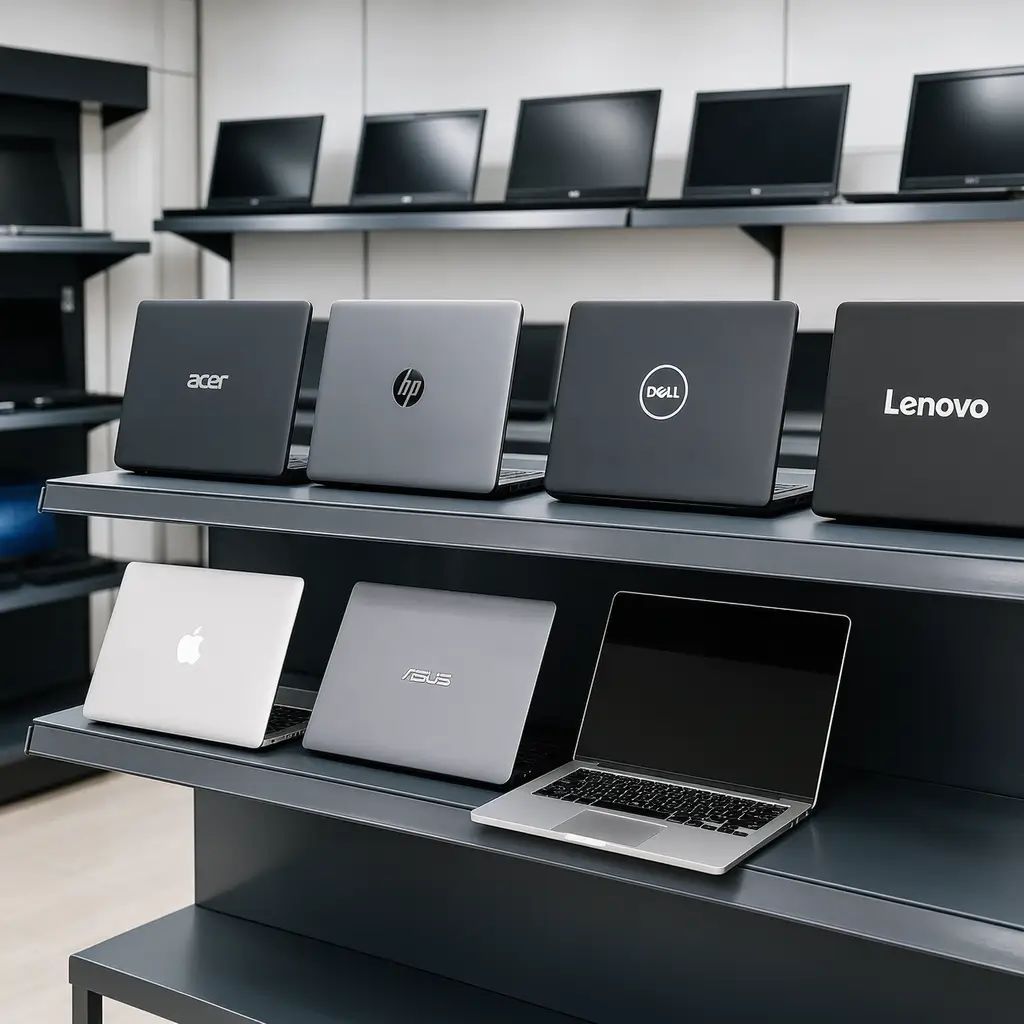
Choosing a laptop is not always as simple as selecting the most popular brand.
With several established manufacturers offering different models, specifications and price categories, buyers often find themselves asking the same question: which laptop brand is the best?
HP, Dell, Lenovo and Apple MacBook are among the most recognisable names in the laptop market. Each has developed a strong identity and offers products designed for different users.
Some customers prefer the familiarity and variety of Windows laptops. Others prioritise business-oriented features, while some prefer the macOS experience offered by Apple.
For laptop retailers and wholesalers, understanding these differences is equally important. Your customers may ask which brand is better for office work, education, programming, graphic design or everyday use.
Rather than declaring one brand the overall winner, it is more useful to understand what each brand offers and who may benefit most from its products.
Let’s take a closer look.
1. HP Laptops: Versatility for Different Users
<em>Hewlett-Packard</em>, commonly known as HP, is one of the most recognised computer brands.
One of HP’s major strengths is the variety of laptops available across different categories and budgets.
From everyday productivity machines to premium business laptops and powerful gaming systems, HP has products designed for different computing needs.
Why Consider HP Laptops?
HP laptops are suitable for a wide range of users.
Students may find models designed for assignments, browsing and online learning.
Office workers can choose productivity-focused machines for spreadsheets, presentations, email and communication.
Professionals may prefer business-oriented HP models with features designed for regular workplace use.
Customers looking for gaming performance can also explore HP’s gaming range, including its OMEN and Victus families.
Who Should Buy HP?
HP is worth considering if you want:
- A variety of laptop models and price categories.
- Computers for education and everyday productivity.
- Business-oriented machines.
- Gaming laptop options.
- Different screen sizes and configurations.
For retailers, HP’s broad product range provides opportunities to serve different customer segments.
However, remember that HP models can vary significantly in specifications and build quality. Always compare individual machines before making purchasing decisions.
2. Dell Laptops: A Strong Choice for Business and Professional Use
Dell has built a strong reputation in the computer industry, particularly in business and professional computing.
Its laptop portfolio includes everyday consumer devices, business machines, workstations and specialised systems.
Popular Dell families include Latitude, Precision, XPS and Inspiron.
Why Consider Dell Laptops?
Dell Latitude laptops are widely associated with business environments.
They are commonly considered by professionals who need computers for office applications, communication, productivity and organisational work.
Dell Precision workstations are designed for more demanding professional workloads, depending on the model and configuration.
The XPS family is positioned as a premium laptop range, while Inspiron models serve different everyday computing needs.
Dell laptops can also appeal to organisations looking to purchase multiple computers for employees.
Who Should Buy Dell?
Dell may be worth considering if you need:
- A business-oriented laptop.
- A machine for office productivity.
- A professional workstation.
- A premium laptop experience.
- A computer for corporate or organisational use.
For laptop resellers, Dell’s different product families create opportunities to serve both individual professionals and business customers.
As with other brands, the specific model, hardware configuration and condition should determine whether a particular Dell laptop is suitable.
3. Lenovo Laptops: Productivity and Practical Design
Lenovo is another major laptop manufacturer with a wide range of products.
Its ThinkPad, ThinkBook, IdeaPad, Yoga and Legion families serve different markets.
Lenovo has a particularly strong presence in business computing through its ThinkPad range.
Why Consider Lenovo Laptops?
ThinkPad laptops are recognised for their business-focused design and productivity features.
Many professionals appreciate their keyboard experience, practical layouts and range of business configurations.
IdeaPad models provide options for everyday computing, students and general users.
Yoga laptops include convertible designs in selected models, offering flexibility for customers who want touchscreen functionality and different usage positions.
Lenovo Legion laptops target customers interested in gaming and performance-oriented computing.
Who Should Buy Lenovo?
Lenovo is worth considering if you want:
- A productivity-focused business laptop.
- A machine for typing-intensive work.
- A laptop for everyday computing.
- A convertible laptop experience.
- A gaming laptop from the Legion family.
For resellers, Lenovo provides an opportunity to serve customers looking for both affordable everyday devices and more specialised machines.
4. Apple MacBook: A Different Computing Experience
Apple MacBook laptops stand out because they use Apple’s macOS operating system rather than Windows.
The MacBook family includes the MacBook Air and MacBook Pro, each serving different users and performance requirements.
Why Consider MacBook?
One of Apple’s strengths is the integration between its hardware, operating system and wider product ecosystem.
For customers who already use an iPhone, iPad or other Apple devices, a MacBook can offer a convenient connected experience.
MacBooks are also popular among creative professionals, writers, developers, business owners and students.
Depending on the model, they can provide strong performance, efficient battery use, high-quality displays and a premium design.
The MacBook Air is generally positioned for portability and everyday productivity, while the MacBook Pro targets users who need more advanced performance and features.
Who Should Buy a MacBook?
A MacBook may be suitable if you:
- Prefer macOS.
- Work within Apple’s ecosystem.
- Need a laptop for creative applications.
- Value portability and battery efficiency.
- Prefer Apple’s hardware and software experience.
However, not every application runs natively on macOS, and some professional or business tools are designed specifically for Windows.
Before purchasing, check that the applications you depend on are compatible with the MacBook model you intend to buy.
5. Which Brand Is Best for Students?
Students have different academic requirements.
A student studying business administration may need a laptop for documents, spreadsheets, online research and presentations.
A computer science student may need a machine capable of running development environments and programming tools.
An architecture or engineering student may require specialised applications with higher hardware demands.
HP, Dell and Lenovo offer a broad selection of Windows laptops that can suit different academic requirements.
MacBooks may also be excellent options for students whose courses and preferred applications support macOS.
The important thing is to check the course requirements before choosing a brand.
Do not spend extra money on features you will not use, but avoid buying a machine that cannot handle your academic workload.
6. Which Brand Is Best for Business Owners?
Business owners generally need laptops that support communication, accounting, productivity, customer management and other daily operations.
HP, Dell and Lenovo all offer business-oriented products.
For organisations buying several computers, it may be useful to standardise certain specifications so that employees can use compatible devices.
MacBooks can also be excellent for businesses that use compatible software and prefer Apple’s ecosystem.
When making a purchasing decision, consider the software your organisation uses, the number of employees, IT support requirements and available budget.
7. Which Brand Is Best for Graphic Design and Creative Work?
Creative professionals should look beyond the manufacturer’s name.
The specifications that matter include:
- Processor performance.
- RAM capacity.
- Display quality and colour reproduction.
- Graphics processing capability.
- Storage capacity.
- Software compatibility.
MacBooks can be attractive to many creative professionals, particularly those working with applications optimised for macOS.
However, powerful Windows laptops from HP, Dell and Lenovo can also handle demanding creative applications.
If your work involves 3D modelling, advanced video editing or specialised graphics software, a laptop with dedicated graphics may be necessary.
Always compare the specific hardware and software requirements before purchasing.
8. Which Brand Should Laptop Retailers Stock?
For laptop retailers, choosing products should involve more than personal preference.
You need to understand what your customers are buying and what your market demands.
Consider stocking a combination of brands and categories where your budget and supplier availability allow it.
For example:
- HP laptops for general productivity and different budget categories.
- Dell Latitude models for business-oriented buyers.
- Lenovo ThinkPad models for professionals and office users.
- MacBooks for customers who prefer macOS.
- Gaming laptops for performance-focused buyers.
This approach can help you serve a wider audience.
However, do not purchase inventory without considering demand, product specifications and expected selling prices.
A good inventory strategy balances popular products with specialised models that appeal to particular customer groups.
9. Why Product Specifications Matter More Than Brand Names
One of the most common mistakes buyers make is assuming that a particular brand automatically guarantees better performance.
In reality, a laptop’s specifications and condition are often more important than the name on its casing.
A well-configured Dell laptop may outperform a lower-specification HP laptop.
A newer Lenovo machine may be more suitable for a particular task than an older MacBook.
This is why customers should compare processor models, RAM, storage, graphics and display features before deciding.
For UK-used laptops, physical condition and battery health should also be considered.
The right laptop is the one that delivers the performance you need at a price that makes sense.
Find Your Next Laptop at Raudhatech Gadget
Whether you prefer HP, Dell, Lenovo or Apple MacBook, finding the right product starts with identifying your needs.
At Raudhatech Gadget, we supply quality UK-used and brand-new laptops across Nigeria.
Our product categories include popular HP, Dell, Lenovo and MacBook models, alongside high-performance gaming laptops.
We also cater to laptop retailers, suppliers, distributors and other businesses looking to purchase laptops in bulk.
Our aim is to provide access to reliable technology at competitive prices while making the sourcing process straightforward for customers nationwide.
Conclusion
HP, Dell, Lenovo and Apple MacBook all have something valuable to offer.
HP provides versatility, Dell offers a broad range of professional and business machines, Lenovo combines practical productivity-focused options with specialised models, while Apple MacBook delivers a distinct macOS experience.
There is no single brand that is best for everyone.
The right choice depends on your budget, intended workload, preferred operating system and required specifications.
Ready to explore quality laptops from these brands?
Visit Raudhatech.com to discover our products and make an enquiry.
You can contact our team through the WhatsApp and email options available on the website. We supply nationwide and welcome enquiries from individual buyers, retailers, distributors and bulk purchasers.
Raudhatech Gadget – Bringing Quality Technology Closer to You.
Leave a Reply